Is Gone with the Wind gone with the wind?

HBO Max has removed the Oscar-winning 1939 film from its platform citing that it perpetuates inaccurate and disturbing stereotypes about race and a racist mythology about American history.

Gone With the Wind was my favourite book and then movie when I was growing up. I read it again and again from age thirteen to sixteen. I even had that famous picture up on my wall of ‘Mammy’ tightening the corset on Scarlett’s ‘sixteen inch’ waist as Scarlett held on to the bedpost, Scarlett’s dark curls cascading down her back.

I was known for loving this book (ask anyone who went to school with me), which I imagined was literary. I also believed that the women were strong, and I was thrilled by the galloping historical narrative and the epic romance.

However, I slowly became awakened to the principle ethos of both book and movie. I wrote my college essay when applying to college on this awakening. Ironically, I attended the same college (Smith College) as Margaret Mitchell who went down in Smith history for refusing to remain in any classroom in which a Black woman entered. Mitchell was a confirmed racist even for her time. Her 1936 novel glorified the slave market and the movie does as well.

One can always find ways to defend a book or movie by emphasising something seemingly positive such as its supposed “strong” female character. And it might have been easy for some to romanticise feisty and loyal Mammy while ignoring the fact that she is given no real name, children or family of her own and that her loyalty came in the form of a blind devotion to whites who owned her. A de-eroticized foil to the fiery Scarlett, Mammy was played in the film by Hattie McDaniel who was the first African American woman to receive an Oscar.*

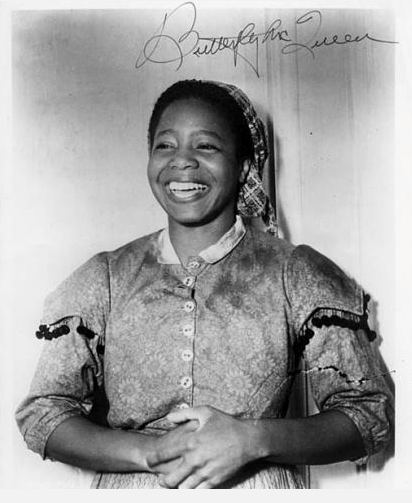
I remember the other slave woman character in the novel, Prissy, played by Butterly McQueen** in the film, who Scarlett slaps across the face. This humiliating physical abuse is presented in such a way where it seems that the slap was deserved. The book suppresses the thought that if the slap occurred in the other direction, the slave woman would have been murdered by whites. I also remember the glorification of the Ku Klux Klan in the book and movie—remember when Frank and the other “heroes” in the narrative go out at night to terrorise Black people? Mitchell and the film’s directors set up this scene and the events leading up to it in such a way to make readers and viewers feel that these men are spreading terror for good reasons, to protect the white man’s honor and the white woman’s safety. For Mitchell, the Ku Klux Klan was understandable and necessary and its members were victims.

I heartily support the film’s removal from HBO during this time of international awakening. And I admire HBO Max for their plan to bring it back along with a statement about its historical context in order to prompt observations about and an analysis of the shocking values this world-famous and beloved movie espouses.

It is empowering to let go of something immoral we thought we loved. That is how we grow.


*At the Oscars, McDaniel was required to sit at a segregated table at the far wall of the room. The hotel had a no-blacks policy, but allowed McDaniel in as a favor. The discrimination continued after the awards ceremony where McDaniel was denied entry to the after parties. Another black woman did not win an Oscar again for 50 years. In the weeks prior to McDaniel winning her Oscar, the producer of Gone With the Wind, omitted the faces of the black actors on the posters advertising the movie in the South. None of the black cast members, including Hattie McDaniel, were allowed to attend the premiere for the movie.

**Butterfly McQueen (pictured above), like Hattie McDaniel, was unable to attend the movie’s premiere because it was held at a whites-only theatre. Often typecast as a maid, she said: “I didn’t mind playing a maid the first time, because I thought that was how you got into the business. But after I did the same thing over and over, I resented it. I didn’t mind being funny, but I didn’t like being stupid.”

The Power of the Unsaid in Komunyakaa’s ‘Facing It’

Yusef Komunyakaa’s poem ‘Facing It’ is a poem of pain and healing. Yet there is no emotional language in the poem. Words like pain, trauma, sadness, loss, grief do not appear. In the third line, a word linked to emotion does appear: ‘tears’. However, even then, it comes in the context of the speaker telling himself to not feel, to repress his emotion: ‘ I said I wouldn’t / dammit: No tears’, which is followed by the dialectal line ‘I’m stone. I’m flesh’ apparently suggesting that the speaker is attempting to become ‘stone’, non-human, like the ‘granite’ his face fades into.  The speaker has flashbacks to his traumatic experience in the Vietnam war as he stands in front of the memorial which lists the names of fallen soldiers. Again, there is a scarcity of emotional language, a dearth. Rather, fleeting images are offered of the past. The speaker communicates his pain through these images and through the final one where he imagines that a woman is trying to erase the names of the dead, but then he realises she is ‘brushing a boy’s hair’. This final image of a mother caring for her son represents gentleness, healing, sanity, reality. The emotion is potent yet the language of emotion does not exist. The unsaid is the crux of this poem, the engine, the epicentre. Reticence and restraint drive the emotion — the speaker seems vulnerable precisely because he refuses to enlist emotional language. He can’t bear to use those kinds of words. It would be too much for him. And they would fall flat on the reader. Denial, repression, metaphor and fantasy pervade the poem. The unsaid allows him to face ‘it’, allows the reader to face it, allows him to communicate his pain and healing to the reader more than direct language ever could.

Facing It

My black face fades,
hiding inside the black granite.
I said I wouldn’t
dammit: No tears.
I’m stone. I’m flesh.
My clouded reflection eyes me
like a bird of prey, the profile of night
slanted against morning. I turn
this way—the stone lets me go.
I turn that way—I’m inside
the Vietnam Veterans Memorial
again, depending on the light
to make a difference.
I go down the 58,022 names,
half-expecting to find
my own in letters like smoke.
I touch the name Andrew Johnson;
I see the booby trap’s white flash.
Names shimmer on a woman’s blouse
but when she walks away
the names stay on the wall.
Brushstrokes flash, a red bird’s
wings cutting across my stare.
The sky. A plane in the sky.
A white vet’s image floats
closer to me, then his pale eyes
look through mine. I’m a window.
He’s lost his right arm
inside the stone. In the black mirror
a woman’s trying to erase names:
No, she’s brushing a boy’s hair.

The Beginning is in the Stopping

Something stops. This is the beginning. Roland Barthes writes about how he loves to leave a movie theatre. How it’s after the movie stops that the experience begins. Emily Dickinson points out that when the bells stop ringing, the church service begins. And when the cogs in a wheel stop, someone has arrived. It’s then that the visitors step out of the carriage, you can finally see a hand, a face. These moments are ‘Positive’, are ‘Circumference’, are ‘Ultimate’.

When Bells stop ringing — Church — begins –
The Positive — of Bells —
When Cogs — stop — that’s Circumference —
The Ultimate — of Wheels.

Let us discourse – with care –

Reticence. Take care with even a quiet remark. It may create  fire. Emily Dickinson wrote:

A Man may make a Remark –

In itself – a quiet thing

That may furnish the Fuse unto a Spark

In dormant nature – lain –


Let us divide – with skill –

Let us discourse – with care –

Powder exists in Charcoal –

Before it exists in Fire –


Jacob and Telling the Truth Slant

This Week’s Torah portion: Vayigash

Telling the Truth Slant

When Jacob hears from his sons that Joseph is alive the verse says, ‘he did not believe them.’ לֹא־הֶֽאֱמִ֖ין לָהֶֽם

Why didn’t their words feel true? He had been waiting twenty-two years to hear this news about his beloved son. But when he finally hears it, he rejects it.

What the brothers say to their father is simple: עוד יוסף חי  (Yosef still lives).

The 11thcentury French commentator Rashi writes that when Jacob heard the words of his sons, Jacob’s heart went away from believing these words.

I think the Torah is telling us something about words. That they are limited and don’t always hold the power to communicate.

Sometimes we just can’t hear plain words.

When the nineteenth century American poet Emily Dickinson read in a newspaper about a friend’s husband who had passed away, she wrote a letter to her grieving friend that began, ‘We read the words but know them not’.

In another letter to a friend Dickinson, after her own father passed away, writes: ‘It is too soon for language’.

In the same way, language was ‘too soon’ for Jacob.

How does Jacob finally absorb this new information? It’s not through words.

Emily Dickinson began a poem with the line, ‘Tell all the truth but tell is slant’. Dickinson was suggesting here that the truth can be communicated, but it must be told slant, indirectly, not straight.

The Torah tells us the slant way that the truth was communicated to Jacob:

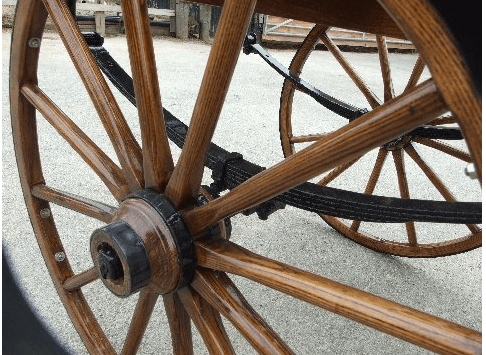
The verse says, ‘and he saw the wagons that Joseph had sent to carry him, and the spirit of their father Joseph was revived.’

Rashi says this means that: The Shechina (God’s presence) which had been separated from him because of his grief, rested upon him once again.

In other words, Jacob could only be ready, be spiritually whole enough to know the news that Joseph was alive not from communication through words but when he was given a non-verbal sign, in this case, the wagons. The wagons were telling the truth slant.

Rashi quotes the midrash: the wagons were a sign from Joseph to remind the father of the topic they were learning together the last time before he left the family – it was the section dealing with the heifer that was beheaded and the wagons were a sign of this.

Jewish tradition is so aware of the need to communicate truth with a slant that there are a few other midrashim about how Jacob came to absorb the new shocking information about his son being alive without words.

One of the other midrashim says that Jacob’s grand-daughter played a harp in order to communicate to her grandfather that Joseph was alive.

The Torah places such a high value on this ability, this gift to communicate without only words, that tradition says that Jacob gave a blessing to his grand-daughter that she would live forever.

The Torah is encouraging us to notice the limits of language in our own lives and bring that acknowledgment to our interactions with people. Holding back words and finding other ways to communicate is always something to consider. For example, sometimes simply sitting with someone who is sad in silence can offer so much comfort. This can be one of the greatest gifts we can give.

Reticence in Shakespeare

In Measure for Measure when the Duke proposes marriage to Isabella, she does not reply. Her response is interpreted differently in different productions.  Her silent acceptance of his proposal is the most common in performance. However, her response can also be interpreted as ‘no.’ Shakespeare, usually praised for the bounty of his language, is less known for his silences and moments of reticence (think of Cordelia’s ‘nothing’.) When Isabella does not respond to the Duke, this is one of Shakespeare’s moments of reticence or ‘open silences’. #reticence #shakespeare #measureformeasure #opensilences


Reticence: The Truth of It

“Now we talk / about everything incessantly, / our moans and grunts turned on a spit / into warm vowels and elegant consonants. / We say plethora, demitasse, ozone and love. / We think we know what each sound means. / There are times when something so joyous / or so horrible happens our only response / is an intake of breath, and then we’re back at the truth of it” — Dorianne Laux

DON’T Express Yourself: On Reticence and Intimacy in the work of Eliot, Dickinson, and Madonna

T.S. Eliot was suspicious of the value of  “personal expression” in poetry. In fact, he wrote that poetry is an “escape from personality.” Eliot placed a profound significance on reticence, reticence of personality, reticence of emotion, and reticence of affect.

Imagine his disdain, his horror, his slow, contemptuous retreat into the shadows of his library if he had heard Madonna belting out “Make him express how he feels” in her hit pop song “Express Yourself.”

Even though the muddled ideas in the song are, as they say here in England, “total rubbish,” there is a heart message at its core, one of longing for intimacy.

“Come on girls, do you believe in love? ‘Cause I’ve got something to say about it and it goes something like this.” The song promises insight into “love” and intimacy.

However, this heart message is turned upside down by the song itself. The lyrics actually encourage behaviour that destroys intimacy: “Make him express how he feels and maybe / Then you’ll know your love is real.” Madonna encourages “girls:” pressure or “make” him talk about his feelings.

We can read on Wikipedia that “Express Yourself” is empowering for women: “The main inspiration behind the song is female empowerment, urging women never to go for second-best and to always express their inner feelings.” Again, as the English say, “This is total rubbish.” If looked at closely, the words diminish women’s power.

Again and again, we hear: “Make him express how he  feels!” although the song is calld “Express Yourself” (Emphasis mine). The confusion — is the song about women expressing themselves or men? — is telling. The lyrics spin in a tizzy of unconscious terror in response to what lies underneath them: a fear of having no control. As a remedy to this fear, the song encourages women to control the man and “make” him express how he feels. Only when she puts her “love to the test” will she “know” her “love is real.” It’s a song that encourages female insecurity and anxiety. Women are not urged here to look at what they want. Rather, the balm they are given for their anxiety is the delusion of control.

Many believe that if we write everything down then the poem will create the strongest impact on the reader. But I have watched my students immerse themselves in reading poetry and discover that removing the most expressive language is what creates the strongest poem. I often share with them Jane Hirshfield’s observation: “What is left unexpressed can affect the reader perhaps even more strongly than what has been explicitly stated.”

Stanley Kunitz’s students tell stories about how he often suggested that they experiment with removing the most expressive lines from their poems, especially the last lines.

And Mary Oliver’s advice: “Modesty will give you vigor. It keeps open the gates of prayer, through which the mystery of the poem streams on its search for form. Just occasionally, take something you have written, that you rather like, that you have felt an even immodest pleasure over, and throw it away.’’

When it comes to relationships many of us were taught by pop lyrics and even by some therapists that making the other person emote is what will lead to the most powerful connection. But it seems that reticence is the key to success in not only poetry but in intimacy.

Knowing she wants (vulnerability) and then saying it in a warm and positive and concise manner, without pressure, while not asking the other person too many questions about their feelings, is the most powerful ingredient for a woman who wishes to be close to her partner. I once heard the phrase from a relationship coach “concise is nice; once will suffice.” Concise expression gives intimacy room to grown and breathe.

As Eliot noted, the value of overdoing self-expression is debatable. The 19thcentury American poet Emily Dickinson seemed to agree: “Tell all the truth but tell it slant,” she wrote where was exploring the concept of not telling all, not giving oneself over to full throated self-expression; rather, she preferred something called “slant” and “circuit.” Expression is “too bright.”

Tell all the truth but tell it slant —
Success in Circuit lies
Too bright for our infirm Delight
The Truth’s superb surprise
As Lightning to the Children eased
With explanation kind
The Truth must dazzle gradually
Or every man be blind —

Words can be used as an attempt to control. Or they can be used to create silences around them, easing with kind explanation, dazzling gradually.

Having the strength to relinquish control is what leads to empowerment. The real frightened message in Madonna’s song seems to be: dominate. If we dominate our partner then we can suppress our fears (and squash the intimacy that comes along with it). This aspect of the song surfaces in the music video where Madonna is dominating the men around her who are serving her.

The academics ignore the fear behind the song and rather twist it into a feminist celebration. They praise the “gender-bending” song and video, which depicts Madonna as a masochist woman dressed as a man with muscular men acting as her workers. One academic writes, “the video portrayed the deconstructive gender-bending approach associated with free play and self-reflexivity of images in postmodernism.”

Is expression a cover for a need to control? Is control the opposite of intimacy? If so, then does expression kill intimacy?

Is expression a part of the process of writing poetry? Or might too much expression take the life out of a poem?

Why might “slant” and “circuit” be more empowering than expression for both poetry and for women in relationships?

Why might embodying the opposite of expression– reticence–achieve intimacy as well as a successful poem?

In the middle of the song Madonna inserts a line that will surely cause the anxiety and fear that will lead even more to the urge to control: “satin sheets are very romantic. What happens when you’re not there?” Why Madonna, Why?

Perhaps intimacy is not what Madonna wants for herself or for other women. Perhaps it’s control and domination.

Intimacy and poetry depend on reticence and vulnerability. See Wislawa Szymboraska’s poem, for example, translated by Clare Cavanagh. Szymborska describes a terrifying event in “Photograph From September 11th” with very little description; it even explicitly states that she will not include an ending. The poet’s respect for the vulnerability of the subjects of the poem is palpable.

Photograph From September 11th

They jumped from the burning floors—
one, two, a few more,
higher, lower.

The photograph halted them in life,
and now keeps them
above the earth toward the earth.

Each is still complete,
with a particular face
and blood well hidden.

There’s enough time
for hair to come loose,
for keys and coins
to fall from pockets.

They’re still within the air’s reach,
within the compass of places
that have just now opened.

I can do only two things for them—
describe this flight
and not add a last line.

Dan Pagis’s vulnerabitly can be sensed as well in his poem “Written in Pencil in a Sealed Railway Car” as he attempts to write about a great tragedy by cutting off mid sentence:

WRITTEN IN PENCIL IN THE SEALED RAILWAY-CAR

here in this carload
i am eve
with abel my son
if you see my other son
cain son of man
tell him that i

Dorianna Laux writes openly in “Enough Music” about how the quiet in a romantic partnership might be what creates the most powerful connection:

Enough Music

Sometimes, when we’re on a long drive,
and we’ve talked enough and listened
to enough music and stopped twice,
once to eat, once to see the view,
we fall into this rhythm of silence.
It swings back and forth between us
like a rope over a lake.
Maybe it’s what we don’t say
that saves us.

More people are guided by Madonna’s songs and similar popular messages than by Dickinson, Kunitz, Laux and Pagis. Here is a call for dazzling reticence, intimate stillness, and the rhythms of silence. Could it be that reticence will save us? Who will write this  pop song?

The Art of Silence and the Beginning of a Poem

Rabbi Mordecai Becher talks about the art of silence in this video where he tells the story of his teacher Rabbi Moshe Shapiro teaching a class. Rabbi Shapiro noticed a recorder that had been placed on the table by a student; it clicked occasionally. The rabbi asked, “What’s with the clicking?” A student responded: “It’s a voice operated recording. When you speak it records and when you’re silent it stops recording. The clicking is the turning on and off of the device.” The rabbi replied, “That is unfortunate. Silence is also communication.”

Rabbi Becher mentions that in the Talmud there is a discussion about the pauses when God spoke to Moses, allowing for Moses to absorb, understand and reflect on what he was being told.

And he quotes from The Book of Job: “Wisdom comes from nothing.” Many say this means that in order to learn something, silence is useful and in fact is the necessary pre-requisite to wisdom.

I would like to practice silence today. When writing a poem, deliberately creating silences. When reading a poem or other text, noticing the silences. In a conversation, to listen and remain quiet for as long as possible, really hear what is being said. When alone stay quiet for two minutes. Notice the silences between the clicking of the keys on the keypad, the car noises outside, the ticking of the clock, birds twittering. Commas, white space, breath. Will I discover? Will my thoughts pour into those spaces? Will my hair comb into them? The deer filling the parks. Bees bumping. This day. (after Alice Miller, “In Time” from Nowhere Nearer.)