
Breaking into Blossom

What is sentimentality? The great modern American poem, ‘A Blessing’ by James Wright, now studied in most MFA programs, pushes itself to the brink of mawkish sap. In the poem, the narrator and his friend visit two ponies who joyfully come over to them, and there is ‘happiness’ and ‘love’ and blessings. However, the poem defies sentimentality, and in fact, dark undercurrents bubble under the surface.  

Here is the poem: 

A Blessing

Just off the highway to Rochester, Minnesota,

Twilight bounds softly forth on the grass.

And the eyes of those two Indian ponies

Darken with kindness.

They have come gladly out of the willows

To welcome my friend and me.

We step over the barbed wire into the pasture

Where they have been grazing all day, alone.

They ripple tensely, they can hardly contain their happiness   

That we have come.

They bow shyly as wet swans. They love each other.

There is no loneliness like theirs.   

At home once more,

They begin munching the young tufts of spring in the darkness.   

I would like to hold the slenderer one in my arms,

For she has walked over to me   

And nuzzled my left hand.   

She is black and white,

Her mane falls wild on her forehead,

And the light breeze moves me to caress her long ear

That is delicate as the skin over a girl’s wrist.

Suddenly I realize

That if I stepped out of my body I would break

Into blossom.

Sentimentality seems to reign supreme with at least four over-the-top lines including ‘they can hardly contain their happiness’ and especially ‘they love each other’.  Normally, these types of lines would be banned from poetry! They seem to say too much, they are abstract, overly emotional in their language, and impossible to believe. It’s unlikely that ponies ‘can’t contain’ what Wright calls ‘happiness’. 

Hyperbolic and self-indulgent sentimentality doesn’t belong in poetry because, by definition, it is a sweetness that lacks depth, and poems are multi-layered. But why and how does sentimentality work—what’s wrong with describing just feeling very happy? I believe that the reason why sentimentality lacks depth is because it hides truths. It pretends and pushes down something real, somber, or painful.

Just when Wright’s poem finds itself on the edge of full-blown sap, the poem is saved: language and lines appear that don’t pretend, that don’t push down. In fact, the central line that holds the whole poem up not only exposes what’s underneath the happiness and love but expresses the opposite of everything the poet seems to be saying. 

The crucial beam that supports the poem is the line: ‘There is no loneliness like theirs’. The line comes as a shock. It’s counterintuitive. How can the same creatures who so ‘gladly’ come, who are so filled with happiness and love can also be filled with an unmatched loneliness? 

Wright seems to suggest here that we are all lonely. Every person, every creature, each one of us is alone. No matter how connected we are to others, we are each one solitary being. And even as the poem highlights connection (no one is alone in this poem — the speaker has a friend with him, and the ponies have each other, and two groups bond) an inexplicable loneliness permeates.  

Alone-ness is a basic element of the human condition. And declaring the loneliness of the ponies (and by extension himself and his friend) after the exuberant outpourings about love and happiness, the narrator is highlighting the fact that we are ultimately alone on another level. We will die or those we love will die before us. Everything will be lost to us eventually: the highway, the friend, grass, ponies, willows. All, except perhaps, love itself.

In the essay ‘On Transience’, Freud describes his young ‘taciturn friend’, a poet actually, melancholy and troubled, tormented by the fact that everything beautiful – nature, the people he loves, and all that he admires – fades away eventually. Freud tries to help his friend by saying that there is a richness in the love we have for the things and people we care about and deeply admire because everything will fade away. 

Ben Jonson makes the following futile and heart breaking argument in his poem ‘On My First Son’ (about the death of his seven year old son): the father hopes to never attach himself again to anything the way he had attached himself to his son. He hopes that ‘what he loves’ in the future he’ll ‘never like too much’. It’s too painful to have ‘too much’ affection when loss could happen at any moment. The vulnerable voice of the bereft father is so poignant because the narrator and the reader know that not liking too much what one loves would make one fated to a life of taciturnity like Freud’s friend. And it’s simply an impossible way to live.

Nothing, (at least nothing material) lasts and intuitively knowing that is a part of loving. Think of the Greek gods – they were immortal, and their lives were shallow and petty. Transience gives life and connection depth. Joy and sadness are intertwined. Wright’s poem seems to understand this which is why he can’t mention ‘happiness’ without ‘loneliness’.

And even earlier in the poem, there are hints of sadness: why do the eyes of the ponies ‘darken’ and why does Wright mention that the ponies are ‘alone’ even while together. The subliminal message is that sadness runs like a current under the beauty of the earth, and this sadness enters the bones of all creatures no matter how glad, connected, and happy.

This idea about the marriage of sadness and happiness, simmering inside the poem, bursts in the poem’s last lines: ‘Suddenly I realize / That if I stepped out of my body I would break / Into blossom.’ It’s an ecstatic ending, an epiphany, almost religious, filled with rapture. However, if we look closely, the language is saying more than describing an experience of joy. Why does Wright mention stepping out of his ‘body’ and why does he use the word ‘break’? Stepping out of one’s body usually denotes the soul leaving the body or dying. And Wright imagines himself breaking, falling apart. This reminds me of Emily Dickinson’s poem which begins, 

I can wade Grief –
Whole Pools of it –
I’m used to that –
But the least push of Joy
Breaks up my feet –
And I tip – drunken –

Dickinson’s narrator also ‘breaks’ from happiness. Ironically, grief can be easier to bear than joy. How can we bear joy when we know (it’s the only thing we know) that all will be lost? However, allowing ourselves to attach to the things of this world while knowing the truth about what will happen may allow us to ‘blossom’ like a flower: open, growing, beautiful. 
So My Soul Can Sing


Yesterday we looked at two poems: the first was the extraordinary poem ‘Trauma is Not Sacred’ by Canadian poet Kai Cheng Thom. The second was a poem which has, in some ways, become an American classic: ‘Feeling Fucked Up’ by the African American poet Etheridge Knight (1931-1991).  

I highly recommend you listen to Pádraig Ó Tuama’s ‘Poetry Unbound’ podcast which featured the Thom poem. You can listen to the poem being read by Ó Tuama. 

And you can read more poems by Kai Cheng Thom on her website

Trauma is Not Sacred 

violence is not special pain is not holy suffering does not make angels abuse defines no one you are more than the things that hurt you you are more than the people you have hurt do not make an altar to your woundedness do not make a fetish out of mine a body belongs to no one a memory is not made to be eaten does it titillate you to hear about assault if i told you my story, would you swallow it whole if i confessed my sins would you feed me to the beasts to purge your own i will show you mine if you show me yours we have all seen the darkness now give us the dawn tell me about the joy you keep in the hollow spaces between your bones tell me again how you laughed when you realized that you were not wholly unlovable i’ll tell you again how i cried when my best friend told me that I was not a bad person remember how we used to count the lines on our palms when we were little how we used to try to read the future for its gifts how we used to make lists of the things we would dream of when finally we were free i will make you a list of the things i’m grateful for i will sing you a litany of reasons to be alive i want to know the songs you wake up for in the morning i want to marvel at the unbelievable graciousness of your being i know that i am capable of pouring love like lavender oil into your cupped palms there is forgiveness like honey pooled in the chambers of our hearts you are the thing i am most grateful for all bodies know how to heal themselves given enough time all demons carry a map of heaven and their scars beneath the skin of every history of trauma       

there is a love poem waiting deep below

There is so much to say about this poem – its lack of punctuation and capital letters and how it looks on the page and more. We began by speaking about the bold statements in the poem, the statements which make large claims and don’t include images. As poets, we are trained to not trust statements and to favour images over abstractions in poetry. Ezra Pound warned poets: ‘Go in fear of abstractions’. Modern poets embraced Pound’s advice and the poetry he espoused. Pound’s famous Haiku-like poem ‘In a Station at the Metro’ is the perfect example of a poem which relies entirely on image:

The apparition of these faces in the crowd:

Petals on a wet, black bough.

Pound embraced Imagism and suggested that poets needed to move away from the effusive and often non-figurative quality of Victorian literature. But reading Thom’s poem makes me think that perhaps it’s time to let go of the image sometimes and allow statements and ideas back into poetry.  Thom successfully makes audacious declarations without hesitation. Poetry is not just about feelings and sensuality but also about ideas. 

I also want to point out that many of the statements are phrased in the negative (Trauma is not sacred, violence is not special, etc.)  These ‘nots’ create a tension in the poem as if the narrator is arguing with someone who thinks the opposite. My hunch is that the narrator is arguing with herself. All poetry is essentially an argument with the self. As William Butler Yeats wrote, ‘Out of the quarrel with others we make rhetoric; out of the quarrel with ourselves we make poetry.’

I encourage you all (and myself!) to become conscious of the arguments you have with yourself and allow that inner dialogue into your poems. You might consider trying to write a poem that is made up of a dialogue between different parts of yourself, for example. Yeats did this in his poem ‘A Dialogue of Self and Soul.’ And interestingly, Yeats seems to have ignored Pound’s dictum (‘Go in fear of abstractions’) and ended ‘A Dialogue of Self and Soul’ with some of the most beautiful statements ever written. 

*

I am glad we had a chance to begin writing a list poem inspired by Knight’s magnificent list in the second stanza of his poem ‘Feeling Fucked Up’. The list poem genre has a long history and has biblical origins (Let there be light, Let the earth sprout vegetation, etc. – these are rough translations of the lines that appear in the beginning of the Hebrew Bible). You can also find lists in Walt Whitman’s ‘Song of Myself’ and in ‘Howl’ by Allen Ginsberg. And in this wonderful poem by Ellen Bass, Because.  If the list poem really interests you then you might like to take a look at the book, The List Poem

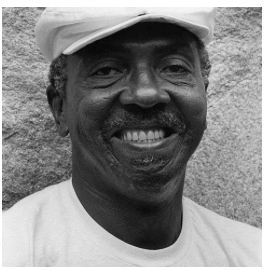
The great Ethridge Knight poem speaks for itself. As I said in class, I attended a memorial service for Knight in New York at Teachers & Writers Collaborative where poets and friends of the poet spoke about him and read from his work. There are many wonderful Knight poems, and people read them, but almost every person at that event read ‘Feeling Fucked Up.’ Reading the poem seemed to liberate people – their faces were shining as they read it. The poem reflects a sense that we can be ‘fucked up’ but still love and be loveable. As Thom wrote, ‘we have all seen the darkness now give us the dawn tell me about the joy you keep in the hollow spaces between your bones tell me again how you laughed when you realized that you were not wholly unlovable i’ll tell you again how i cried when my best friend told me that I was not a bad person remember’. Knight’s poem gives us permission to laugh, rage and love simultaneously and to feel that we are ‘not a bad person’ despite it all.  

Feeling Fucked Up 

Lord she’s gone done left me done packed / up and split

and I with no way to make her

come back and everywhere the world is bare

bright bone white    crystal sand glistens

dope death dead dying and jiving drove

her away made her take her laughter and her smiles

and her softness and her midnight sighs—

Fuck Coltrane and music and clouds drifting in the sky

fuck the sea and trees and the sky and birds

and alligators and all the animals that roam the earth

fuck marx and mao fuck fidel and nkrumah and

democracy and communism fuck smack and pot

and red ripe tomatoes fuck joseph fuck mary fuck

god jesus and all the disciples fuck fanon nixon

and malcolm fuck the revolution fuck freedom fuck

the whole muthafucking thing

all i want now is my woman back

so my soul can sing