Who Made the World?

Dear Poets,

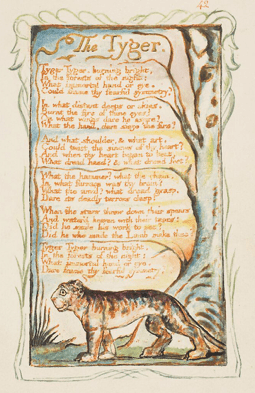
The Tyger by William Blake

Tell me, what is it you plan to do
With your one wild and precious life?

This is the question that Mary Oliver asks at the end of ‘The Summer Day’. We discussed this poem and others this week in an online poetry session and then we wrote in response to the poem. 

I wanted to share a few thoughts with you about this poem and others that we discussed.

Mary Oliver’s ‘The Summer Day’ and William Blake’s ‘The Tyger’ are both poems of wonder and questions. 

The Oliver poem celebrates, with trembling awe, the complicated beauty of the world and wonders about the origins of things:  

The Summer Day                                                                                

Who made the world?
Who made the swan, and the black bear?
Who made the grasshopper?
This grasshopper, I mean-
the one who has flung herself out of the grass,
the one who is eating sugar out of my hand,
who is moving her jaws back and forth instead of up and down-
who is gazing around with her enormous and complicated eyes.
Now she lifts her pale forearms and thoroughly washes her face.
Now she snaps her wings open, and floats away.
I don’t know exactly what a prayer is.
I do know how to pay attention, how to fall down
into the grass, how to kneel in the grass,
how to be idle and blessed, how to stroll through the fields,
which is what I have been doing all day.
Tell me, what else should I have done?
Doesn’t everything die at last, and too soon?
Tell me, what is it you plan to do
With your one wild and precious life?

Beginning the poem with questions (such as ‘Who made the world?’) highlights the narrator’s almost childlike standpoint which leads to a wisdom framed with more questions at the end of the poem. 

The whole poem exudes a sense of amazement, and at the center of the poem’s bewildered gratitude is the statement: ‘I don’t know exactly what a prayer is.’ 

There is something endearing and engaging about a narrator who admits to not knowing. This line is the gate which opens to the rest of the poem. A sense of being ‘blessed’ follows; although the narrator ‘does not know exactly what prayer is’ she is comfortable using the language of the sacred only after admitting that she doesn’t know how to pray. Somehow conceding that she does not ‘know’ leads to accessing a connection to the divine.   

The holiness radiating out of this moment generates questions about transience and spawns that seemingly simple but deeply rich last question, ‘what is it you plan to do / With your one wild and precious life?’ This question echoes the last line of James Wright’s poem and also Rilke’s last line in ‘Archaic Torso of Apollo’—each of these three last lines express the almost the same idea in different forms. (Contrasting the poems by Wright, Rilke and Oliver led me to wonder about other poems which end with the word ‘life’ and I could only think of one other – ‘Words’ by Sylvia Plath. It’s difficult to pull off the word ‘life’ in a poem but the words resonates deeply in Western culture. I think of the words in Deutoeronmy (Chapter 30, verse 19): Choose life.( וּבָֽחַרְתָּ֙ בַּֽחַיִּ֔ים). If ‘life’ can be placed in a poem in a way where it surprises then it’s worth trying. (See if you can use the word in a poem – preface it with other words that will make its appearance startle the reader). 

The richness of Oliver’s question, in part, comes from the word ‘you’ (the first and only time this word is used in the poem) — the reader is challenged, startled into attention, when addressed with ‘you’ and is asked to look at themself.  (Consider writing a poem where the word you appears in one of the last lines for the first and only time). 

The other word which jumps out of this question is ‘wild’, a surprising and vital choice of language, disquieting, almost frightening. We are told that our lives are ‘wild’ – perhaps the word suggests that our lives, fragile and finite, can be cut off at any moment, like the grasshopper’s. The word also implies that we are not fully in control of what happens to us and to what happens around us. Life is fierce, rough, and phenomenally beautiful and exquisite. And wild – anything can happen at any moment: ineffably joyful moments or devastating and everything in between.  

It’s hard to face it, life is brutal: we lose people we love. And we can’t deny the unspeakable injustices and viciousness taking place in the world. And we also can’t deny the utter radiance of the world. The narrator’s admission of not knowing followed by feeling blessed led to this final question: what choices will you attempt to make in your unpredictable, brutal, ecstatic, and finite life? (Try including the word ‘wild’ in a surprising place in one of your own poems!) 

There are two other places I can think of (off the top of my head) where the word ‘wild’ appears in American poetry, and I can’t help but mention them here: 

In Emily Dickinson’s ‘Wild Nights’, wildness is celebrated – it is awesome and luxurious, connecting and a bit terrifying, intimate and unfamiliar. And in the ending of Gerald Stern’s ‘The Dancing’, it’s a word of awe and horror. 

Prompt: 

After looking at the Oliver poem and the Blake poem (below) we wrote poems that began with questions and ended with questions and included a line in the center that began ‘I don’t know’. 

The Blake poem also asks childlike questions and focuses even more on wildness than the Oliver poem. It is much darker than ‘The Summer Day’ and in many ways more intense: Blake also wonders and asks questions about this world but it seems to me that the speaker is not just feeling awe and wonder but shock. It’s almost as if he can’t believe what he is asking. This shock is expressed in seemingly very simple questions, which I will paraphrase here: 

1.     How is it possible that a creature as beautiful and ferocious as a tiger exists? 

2.     Whoever would have created such an animal and how and why?

3.     How is it possible that the lamb could have come from the same source as the tiger?

Here is Blak’es ‘The Tyger’ (his choice of spelling):

The Tyger

Tyger Tyger, burning bright, 

In the forests of the night; 

What immortal hand or eye, 

Could frame thy fearful symmetry?

In what distant deeps or skies. 

Burnt the fire of thine eyes?

On what wings dare he aspire?

What the hand, dare seize the fire?

And what shoulder, & what art,

Could twist the sinews of thy heart?

And when thy heart began to beat.

What dread hand? & what dread feet?

What the hammer? what the chain,

In what furnace was thy brain?

What the anvil? what dread grasp.

Dare its deadly terrors clasp?

When the stars threw down their spears 

And water’d heaven with their tears:

Did he smile his work to see?

Did he who made the Lamb make thee?

Tyger Tyger burning bright,

In the forests of the night:

What immortal hand or eye,

Dare frame thy fearful symmetry?

‘The Tyger’ was the first proper poem I ever read. I was probably between eight and ten years old. I loved the image of the brightly coloured animal in the night forests. I didn’t understand much more than that although I probably intuitively absorbed some of its meanings. 

Now, when looking at the poem, I am aware of the concentrated passion of Blake’s questions. This is the language of awesome intensity; the poem bristles with language like ‘burning’, ‘fearful’, ‘Seize the fire’, ‘twist the sinews’, ‘dread hand’ and ‘deadly terrors’. The narrator is expressing his absolute astonishment that the ‘immortal hand’ could create a creature of such ferociousness – his questions suggest that the creator might have these same qualities as well, which is terrifying. 

He comes to the realization that the lamb, a very different kind of animal, also exists in the same world as the tiger. The origins of these creatures then is both gentle and fierce. How can such a contradiction be? Blake does not pretend to answer his questions. The whole poemis a series of questions that, like the Oliver poem, encourages the reader to step back and look at themselves, at their own animal qualities, at their own ferocity and softness, at their own questions about the sacred and this paradoxical world.   

After our discussion about and writings from these poems we looked at the Sharon Olds poem below. It’s a poem that inspires us to look at ourselves, our animal selves, our denials, our loyalties, our attachments, our wild and precious lives and the choices we make (Olds uses the word ‘life’ three times in the poem’s two final lines). 

I Could Not Tell            

I could not tell I had jumped off that bus,
that bus in motion, with my child in my arms,
because I did not know it. I believed my own story: 
I had fallen, or the bus had started up
when I had one foot in the air.

I would not remember the tightening of my jaw, 

the irk that I’d missed my stop, the step out 
into the air, the clear child
gazing about her in the air as I plunged
to one knee on the street, scraped it, twisted it, 
the bus skidding to a stop, the driver
jumping out, my daughter laughing
Do it again.

                  I have never done it

again. I have been very careful.

I have kept an eye on that nice young mother 

who suddenly threw herself

off the moving vehicle 

onto the stopped street, her life

in her hands, her life’s life in her hands. 

Prompt:

We wrote poems with the repeating lines ‘I could not tell’ or ‘I would not tell’ or ‘I will not tell’ or ‘I don’t want to tell’. 

Finally, we ended the session by looking at a poem of profound gratitude and comfort. I often like to end the class with a poem of solace. It is possible to write such poems! ‘Small Kindnesses’ is below. It is written by Danusha Laméris. And here is a link to Helena Bonham Carter reading the poem

Small Kindnesses

I’ve been thinking about the way, when you walk
down a crowded aisle, people pull in their legs
to let you by. Or how strangers still say “bless you”
when someone sneezes, a leftover
from the Bubonic plague. “Don’t die,” we are saying.
And sometimes, when you spill lemons
from your grocery bag, someone else will help you
pick them up. Mostly, we don’t want to harm each other.
We want to be handed our cup of coffee hot,
and to say thank you to the person handing it. To smile
at them and for them to smile back. For the waitress
to call us honey when she sets down the bowl of clam chowder,
and for the driver in the red pick-up truck to let us pass.
We have so little of each other, now. So far
from tribe and fire. Only these brief moments of exchange.
What if they are the true dwelling of the holy, these
fleeting temples we make together when we say, “Here,
have my seat,” “Go ahead—you first,” “I like your hat.”

Breaking into Blossom

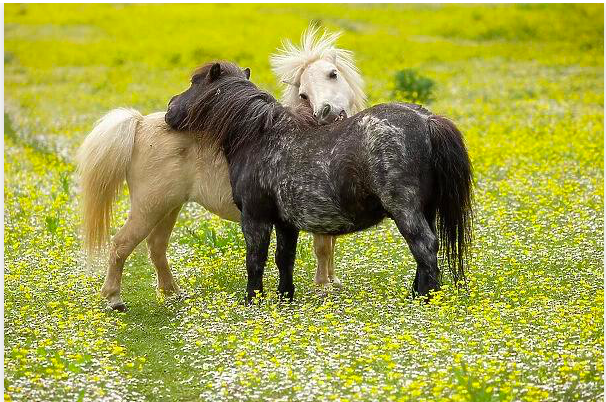
What is sentimentality? The great modern American poem, ‘A Blessing’ by James Wright, now studied in most MFA programs, pushes itself to the brink of mawkish sap. In the poem, the narrator and his friend visit two ponies who joyfully come over to them, and there is ‘happiness’ and ‘love’ and blessings. However, the poem defies sentimentality, and in fact, dark undercurrents bubble under the surface.  

Here is the poem: 

A Blessing

Just off the highway to Rochester, Minnesota,

Twilight bounds softly forth on the grass.

And the eyes of those two Indian ponies

Darken with kindness.

They have come gladly out of the willows

To welcome my friend and me.

We step over the barbed wire into the pasture

Where they have been grazing all day, alone.

They ripple tensely, they can hardly contain their happiness   

That we have come.

They bow shyly as wet swans. They love each other.

There is no loneliness like theirs.   

At home once more,

They begin munching the young tufts of spring in the darkness.   

I would like to hold the slenderer one in my arms,

For she has walked over to me   

And nuzzled my left hand.   

She is black and white,

Her mane falls wild on her forehead,

And the light breeze moves me to caress her long ear

That is delicate as the skin over a girl’s wrist.

Suddenly I realize

That if I stepped out of my body I would break

Into blossom.

Sentimentality seems to reign supreme with at least four over-the-top lines including ‘they can hardly contain their happiness’ and especially ‘they love each other’.  Normally, these types of lines would be banned from poetry! They seem to say too much, they are abstract, overly emotional in their language, and impossible to believe. It’s unlikely that ponies ‘can’t contain’ what Wright calls ‘happiness’. 

Hyperbolic and self-indulgent sentimentality doesn’t belong in poetry because, by definition, it is a sweetness that lacks depth, and poems are multi-layered. But why and how does sentimentality work—what’s wrong with describing just feeling very happy? I believe that the reason why sentimentality lacks depth is because it hides truths. It pretends and pushes down something real, somber, or painful.

Just when Wright’s poem finds itself on the edge of full-blown sap, the poem is saved: language and lines appear that don’t pretend, that don’t push down. In fact, the central line that holds the whole poem up not only exposes what’s underneath the happiness and love but expresses the opposite of everything the poet seems to be saying. 

The crucial beam that supports the poem is the line: ‘There is no loneliness like theirs’. The line comes as a shock. It’s counterintuitive. How can the same creatures who so ‘gladly’ come, who are so filled with happiness and love can also be filled with an unmatched loneliness? 

Wright seems to suggest here that we are all lonely. Every person, every creature, each one of us is alone. No matter how connected we are to others, we are each one solitary being. And even as the poem highlights connection (no one is alone in this poem — the speaker has a friend with him, and the ponies have each other, and two groups bond) an inexplicable loneliness permeates.  

Alone-ness is a basic element of the human condition. And declaring the loneliness of the ponies (and by extension himself and his friend) after the exuberant outpourings about love and happiness, the narrator is highlighting the fact that we are ultimately alone on another level. We will die or those we love will die before us. Everything will be lost to us eventually: the highway, the friend, grass, ponies, willows. All, except perhaps, love itself.

In the essay ‘On Transience’, Freud describes his young ‘taciturn friend’, a poet actually, melancholy and troubled, tormented by the fact that everything beautiful – nature, the people he loves, and all that he admires – fades away eventually. Freud tries to help his friend by saying that there is a richness in the love we have for the things and people we care about and deeply admire because everything will fade away. 

Ben Jonson makes the following futile and heart breaking argument in his poem ‘On My First Son’ (about the death of his seven year old son): the father hopes to never attach himself again to anything the way he had attached himself to his son. He hopes that ‘what he loves’ in the future he’ll ‘never like too much’. It’s too painful to have ‘too much’ affection when loss could happen at any moment. The vulnerable voice of the bereft father is so poignant because the narrator and the reader know that not liking too much what one loves would make one fated to a life of taciturnity like Freud’s friend. And it’s simply an impossible way to live.

Nothing, (at least nothing material) lasts and intuitively knowing that is a part of loving. Think of the Greek gods – they were immortal, and their lives were shallow and petty. Transience gives life and connection depth. Joy and sadness are intertwined. Wright’s poem seems to understand this which is why he can’t mention ‘happiness’ without ‘loneliness’.

And even earlier in the poem, there are hints of sadness: why do the eyes of the ponies ‘darken’ and why does Wright mention that the ponies are ‘alone’ even while together. The subliminal message is that sadness runs like a current under the beauty of the earth, and this sadness enters the bones of all creatures no matter how glad, connected, and happy.

This idea about the marriage of sadness and happiness, simmering inside the poem, bursts in the poem’s last lines: ‘Suddenly I realize / That if I stepped out of my body I would break / Into blossom.’ It’s an ecstatic ending, an epiphany, almost religious, filled with rapture. However, if we look closely, the language is saying more than describing an experience of joy. Why does Wright mention stepping out of his ‘body’ and why does he use the word ‘break’? Stepping out of one’s body usually denotes the soul leaving the body or dying. And Wright imagines himself breaking, falling apart. This reminds me of Emily Dickinson’s poem which begins, 

I can wade Grief –
Whole Pools of it –
I’m used to that –
But the least push of Joy
Breaks up my feet –
And I tip – drunken –

Dickinson’s narrator also ‘breaks’ from happiness. Ironically, grief can be easier to bear than joy. How can we bear joy when we know (it’s the only thing we know) that all will be lost? However, allowing ourselves to attach to the things of this world while knowing the truth about what will happen may allow us to ‘blossom’ like a flower: open, growing, beautiful. 

So My Soul Can Sing


Yesterday we looked at two poems: the first was the extraordinary poem ‘Trauma is Not Sacred’ by Canadian poet Kai Cheng Thom. The second was a poem which has, in some ways, become an American classic: ‘Feeling Fucked Up’ by the African American poet Etheridge Knight (1931-1991).  

I highly recommend you listen to Pádraig Ó Tuama’s ‘Poetry Unbound’ podcast which featured the Thom poem. You can listen to the poem being read by Ó Tuama. 

And you can read more poems by Kai Cheng Thom on her website

Trauma is Not Sacred 

violence is not special pain is not holy suffering does not make angels abuse defines no one you are more than the things that hurt you you are more than the people you have hurt do not make an altar to your woundedness do not make a fetish out of mine a body belongs to no one a memory is not made to be eaten does it titillate you to hear about assault if i told you my story, would you swallow it whole if i confessed my sins would you feed me to the beasts to purge your own i will show you mine if you show me yours we have all seen the darkness now give us the dawn tell me about the joy you keep in the hollow spaces between your bones tell me again how you laughed when you realized that you were not wholly unlovable i’ll tell you again how i cried when my best friend told me that I was not a bad person remember how we used to count the lines on our palms when we were little how we used to try to read the future for its gifts how we used to make lists of the things we would dream of when finally we were free i will make you a list of the things i’m grateful for i will sing you a litany of reasons to be alive i want to know the songs you wake up for in the morning i want to marvel at the unbelievable graciousness of your being i know that i am capable of pouring love like lavender oil into your cupped palms there is forgiveness like honey pooled in the chambers of our hearts you are the thing i am most grateful for all bodies know how to heal themselves given enough time all demons carry a map of heaven and their scars beneath the skin of every history of trauma       

there is a love poem waiting deep below

There is so much to say about this poem – its lack of punctuation and capital letters and how it looks on the page and more. We began by speaking about the bold statements in the poem, the statements which make large claims and don’t include images. As poets, we are trained to not trust statements and to favour images over abstractions in poetry. Ezra Pound warned poets: ‘Go in fear of abstractions’. Modern poets embraced Pound’s advice and the poetry he espoused. Pound’s famous Haiku-like poem ‘In a Station at the Metro’ is the perfect example of a poem which relies entirely on image:

The apparition of these faces in the crowd:

Petals on a wet, black bough.

Pound embraced Imagism and suggested that poets needed to move away from the effusive and often non-figurative quality of Victorian literature. But reading Thom’s poem makes me think that perhaps it’s time to let go of the image sometimes and allow statements and ideas back into poetry.  Thom successfully makes audacious declarations without hesitation. Poetry is not just about feelings and sensuality but also about ideas. 

I also want to point out that many of the statements are phrased in the negative (Trauma is not sacred, violence is not special, etc.)  These ‘nots’ create a tension in the poem as if the narrator is arguing with someone who thinks the opposite. My hunch is that the narrator is arguing with herself. All poetry is essentially an argument with the self. As William Butler Yeats wrote, ‘Out of the quarrel with others we make rhetoric; out of the quarrel with ourselves we make poetry.’

I encourage you all (and myself!) to become conscious of the arguments you have with yourself and allow that inner dialogue into your poems. You might consider trying to write a poem that is made up of a dialogue between different parts of yourself, for example. Yeats did this in his poem ‘A Dialogue of Self and Soul.’ And interestingly, Yeats seems to have ignored Pound’s dictum (‘Go in fear of abstractions’) and ended ‘A Dialogue of Self and Soul’ with some of the most beautiful statements ever written. 

*

I am glad we had a chance to begin writing a list poem inspired by Knight’s magnificent list in the second stanza of his poem ‘Feeling Fucked Up’. The list poem genre has a long history and has biblical origins (Let there be light, Let the earth sprout vegetation, etc. – these are rough translations of the lines that appear in the beginning of the Hebrew Bible). You can also find lists in Walt Whitman’s ‘Song of Myself’ and in ‘Howl’ by Allen Ginsberg. And in this wonderful poem by Ellen Bass, Because.  If the list poem really interests you then you might like to take a look at the book, The List Poem

The great Ethridge Knight poem speaks for itself. As I said in class, I attended a memorial service for Knight in New York at Teachers & Writers Collaborative where poets and friends of the poet spoke about him and read from his work. There are many wonderful Knight poems, and people read them, but almost every person at that event read ‘Feeling Fucked Up.’ Reading the poem seemed to liberate people – their faces were shining as they read it. The poem reflects a sense that we can be ‘fucked up’ but still love and be loveable. As Thom wrote, ‘we have all seen the darkness now give us the dawn tell me about the joy you keep in the hollow spaces between your bones tell me again how you laughed when you realized that you were not wholly unlovable i’ll tell you again how i cried when my best friend told me that I was not a bad person remember’. Knight’s poem gives us permission to laugh, rage and love simultaneously and to feel that we are ‘not a bad person’ despite it all.  

Feeling Fucked Up 

Lord she’s gone done left me done packed / up and split

and I with no way to make her

come back and everywhere the world is bare

bright bone white    crystal sand glistens

dope death dead dying and jiving drove

her away made her take her laughter and her smiles

and her softness and her midnight sighs—

Fuck Coltrane and music and clouds drifting in the sky

fuck the sea and trees and the sky and birds

and alligators and all the animals that roam the earth

fuck marx and mao fuck fidel and nkrumah and

democracy and communism fuck smack and pot

and red ripe tomatoes fuck joseph fuck mary fuck

god jesus and all the disciples fuck fanon nixon

and malcolm fuck the revolution fuck freedom fuck

the whole muthafucking thing

all i want now is my woman back

so my soul can sing

Troubled Into Their Making: ‘Bees’ and ‘She Had Some Horses’

The late American poet Lucie Brock-Broido wrote, ‘My theory is that a poem is troubled into its making. It’s not like a thing that blooms; it’s a thing that wounds.’

I have been thinking about these words in relation to the discussion we had in our Comfort & Affliction poetry class yesterday about the poems ‘Bees’ by Jean Valentine (1934-2020) and ‘She Had Some Horses’ by Joy Harjo (b. 1951).

I chose to explore these two poems together with the group because I associate them with each other – I didn’t know why. Not until we discussed them. It was instinct. Only after the discussion did I realize how much both poems feel born of wounds, both ‘troubled’ into their making.

On the surface, the poems are wildly different from each other in the most obvious ways. ‘Bees’ is short (ten lines), concise and unadorned, written in uncomplicated and modest sentences. One line simply states these casual words: ‘Another man comes over’. The Harjo poem is longer (45 lines) and expansive, complex, even sprawling. It has an unrestrained quality both in its sometimes wild language and images and long, breathing lines. One single line reads: ‘She had horses who called themselves, “spirit” and kept their voices secret and to themselves.’  

I’d like to write a few words about ‘Bees’ and then post the Harjo poem — after reading it, you can draw your own connections and associations between the two poems.

While almost all of Jean Valentine’s poems come from dreams she almost never mentions in the poem that the narrative is a dream. Dreams are murky especially when you wake up and attempt to describe one. But Valentine distils the dream into translucent, vibrant language – reading her poems is like looking at the varied coloured stones at the bottom of a clear lake. She has said, ‘I’m always working with things that I don’t understand – with the unconscious, the invisible. And trying to find a way to translate it.’

Adrienne Rich also used a lake image in this way to describe Valentine’s work: ‘looking into a Jean Valentine poem is like looking into a lake: you can see your own outline, and the shapes of the upper world, reflected among rocks . . . The known and familiar become one with the mysterious and half-wild, at the place where consciousness and the subliminal meet.’ 

Here is the poem:

Bees 
                  for Sandra McPherson


A man whose arms and shoulders
and hands and face and ears are covered with bees
says, I’ve never known such pain.
Another man comes over
with bees all over his hands—
only bees can get the other bees off.
The first man says again,
I’ve never known such pain.
The second man’s bees begin to pluck
the first grave yellow bees off, one by one.

One participating poet in class yesterday mentioned that the poem felt like a fable. Another said that it seemed to speak psychological truths about suffering: the very thing that is hurting you may be what will heal you. A thorn can remove a thorn. Some poisons can remove poison. And in this dream-poem, bees can remove bees from someone’s body.

The poem ‘Bees’ touches on the mysteries of suffering, empathy, human connection, and healing. The man who is suffering from the bees is saved by another man with bees. Does this suggest that pain can only be truly addressed by another person who experiences that same pain?

In our discussion we marvelled at the clarity of the narrative – a potentially complicated story is condensed and told without confusing the reader. And the unpretentious quality of the language is remarkable – the poem has a modesty to it. Simple basic words fill the poem: ‘arms and shoulders’ and ‘The first man says’ and ‘get the other bees off’. Words like ‘says’ and ‘get’ are dangerously bland yet the poem benefits from them – we trust this ordinary, authentic speaker. There is nothing fancy there.

The mundanity of these words are relaxing and create a sense of trust. I can imagine how in most poetry workshops the choice of those words would not go down well – I can hear someone saying, ‘can you think of fresher language to use?’ But in this case the commonplace language reflects a mature, grounded speaker – no need to show off with impressively unique words (although there will be one such word in the poem’s last line); rather, we have a trusted speaker, a friend, telling us a profound story with a simplicity that mesmerizes– it reminds me of Stanley Kunitz’s words: ‘I dream of an art so transparent you can look through it and see the world.’ When reading ‘Bees’ I forget I am reading a poem – I get lost in it and feel I am just looking at the world.

And then we come to the last line. The use of the words ‘grave’ and ‘yellow’, especially next to each other, took our breath away yesterday. Yellow is not a colour one would associate with ‘grave’. We spoke about how the word ‘yellow’ is honouring the bees, praising them for saving the man by highlighting their bright colour. And the word ‘grave’, so surprising, so mysterious here. Who would ever associate the word grave with bees? ‘Grave’ has connotations with a burial place — death is an undercurrent in the poem. But the word grave is used more obviously I think to emphasize the true weighty significance of the oxymoron: the bees in the world of this poem both cause and remove suffering.

This short poem raises so many questions but one last question I’ll mention is: why are these men with the bees and not women? I don’t have an answer to that but I will point out that the poem is written by a woman and is dedicated to another woman — the writer Sandra McPherson. This giving of words from one woman to another reflects the giving of the bees from one man to another man. Words wound and heal; bees wound and (at least in this poem’s world) heal. Perhaps the poem is respecting the suffering that both sexes experience. And including two men in the poem rather than a man and a woman might suggest that the two men are the same man. Although the poem honours human connection and empathy, perhaps it’s ultimately considering self-healing. It’s asking, how might we, ‘after great pain’ as Emily Dickinson wrote, restore ourselves?

Joy Harjo’s poem ‘She Had Some Horses’ is also an animal poem and raises questions about individual suffering and larger, community suffering, and it also considers oxymorons within suffering.

Here is Harjo’s poem:

She Had Some Horses


She had horses who were bodies of sand.

She had horses who were maps drawn of blood.

She had horses who were skins of ocean water.

She had horses who were the blue air of sky.

She had horses who were fur and teeth.

She had horses who were clay and would break.

She had horses who were splintered red cliff.

She had some horses.


She had horses with long, pointed breasts.

She had horses with full, brown thighs.

She had horses who laughed too much.

She had horses who threw rocks at glass houses.

She had horses who licked razor blades.


She had some horses.


She had horses who danced in their mothers’ arms.

She had horses who thought they were the sun and their bodies shone and burned like stars.

She had horses who waltzed nightly on the moon.

She had horses who were much too shy, and kept quiet in stalls of their own making.


She had some horses.


She had horses who liked Creek Stomp Dance songs.

She had horses who cried in their beer.

She had horses who spit at male queens who made them afraid of themselves.

She had horses who said they weren’t afraid.

She had horses who lied.

She had horses who told the truth, who were stripped bare of their tongues.


She had some horses.


She had horses who called themselves, “horse.”

She had horses who called themselves, “spirit.” and kept their voices secret and to themselves.

She had horses who had no names.

She had horses who had books of names.


She had some horses.


She had horses who whispered in the dark, who were afraid to speak.

She had horses who screamed out of fear of the silence, who carried knives to protect themselves from ghosts.

She had horses who waited for destruction.

She had horses who waited for resurrection.


She had some horses.


She had horses who got down on their knees for any savior.

She had horses who thought their high price had saved them.

She had horses who tried to save her, who climbed in her bed at night and prayed as they raped her.


She had some horses.


She had some horses she loved.

She had some horses she hated.

These were the same horses.

Phantom Among Phantoms: Robert Desnos’s ‘I have so often dreamed of you…’

Comfort and Affliction: A Poery Reading Group and Writing Workshop

“Poetry comforts the afflicted and afflicts the comfortable.” – Lucille Clifton

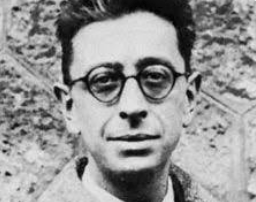
Robert Desnos

On the of 8th May I met with my poetry group on zoom and, in addition to workshopping poems by participants, we discussed Robert Desnos’s ‘I Have So Often Dreamed of You’ (translated from the French by Paul Auster) titled ‘J’ai tant rêvé de toi’ in the original.  (I have posted the original and Auster’s translation below).

Desnos (1900-1945) was initially associated with the surrealist movement in Paris in the 1920s although he grew away from that group. He was Jewish (and also a part of the French resistance in World War II), and died in a Nazi concentration camp.  See Jake Marmer’s recent essay on Desnos in Tablet.

In our class we talked about longing and vulnerability and the repeated line in the poem (‘I have so often dreamed of you’ / ‘J’ai tant rêvé de toi’). What does it mean to live, sleep, talk, walk with someone who isn’t with you or even no longer alive? This is the question that haunts the poem. We discussed how within that line lives both affliction and comfort and how its repetition provides some solace even as the longing embedded in the line opens up fresh hurt. We compared the poem to the Song of Songs (found in the Hebrew Bible – Shir Ha’shirim, שִׁיר הַשִּׁירִים‎) and observed how the painful intensity of longing is palpable in both the 20th century poem and in the holy text. However, the speaker in Desnos’s poem seems to be longing for a beloved who may no longer be alive. The sense that the longing is for a ghost, one who has ‘become unreal’, saturates the poem. But over the course of the poem, the speaker himself sinks into a shadow and becomes a ‘phantom among phantoms’; the beloved transforms into a real ‘body’ with ‘lips’, a ‘forehead’, a person to whom he addresses with the last words ‘your life’ / ‘ta vie’).   

After our discussion we watched this beautifully animated video of the poem.

I Have So Often Dreamed of You

I have so often dreamed of you that you become unreal.
Is it still time enough to reach that living body and to kiss
on that mouth the birth of the voice so dear to me?
I have so often dreamed of you that my arms used as they are
to meet on my breast in embracing your shadow would
perhaps not fit the contour of your body.
And, before the real appearance of what has haunted and ruled
me for days and years, I might become only a shadow.
Oh the weighing of sentiment,
I have so often dreamed of you that there is probably no time
now to waken. I sleep standing, my body exposed to all the
appearances of life and love and you, who alone still
matter to me, I could less easily touch your forehead and
your lips than the first lips and the first forehead I
might meet by chance.
I have so often dreamed of you, walked, spoken, slept with your
phantom that perhaps I can be nothing any longer than a
phantom among phantoms and a hundred times more shadow
than the shadow which walks and will walk joyously over
the sundial of your life.

Translation Paul Auster

……………………….

J’ai Tant Rêvé de Toi

J’ai tant rêvé de toi que tu perds ta réalité.
Est-il encore temps d’atteindre ce corps vivant
Et de baiser sur cette bouche la naissance
De la voix qui m’est chère?

J’ai tant rêvé de toi que mes bras habitués
En étreignant ton ombre
A se croiser sur ma poitrine ne se plieraient pas
Au contour de ton corps, peut-être.
Et que, devant l’apparence réelle de ce qui me hante
Et me gouverne depuis des jours et des années,
Je deviendrais une ombre sans doute.
O balances sentimentales.

J’ai tant rêvé de toi qu’il n’est plus temps
Sans doute que je m’éveille.
Je dors debout, le corps exposé
A toutes les apparences de la vie
Et de l’amour et toi, la seule
qui compte aujourd’hui pour moi,
Je pourrais moins toucher ton front
Et tes lèvres que les premières lèvres
et le premier front venu.

J’ai tant rêvé de toi, tant marché, parlé,
Couché avec ton fantôme
Qu’il ne me reste plus peut-être,
Et pourtant, qu’a être fantôme
Parmi les fantômes et plus ombre
Cent fois que l’ombre qui se promène
Et se promènera allègrement
Sur le cadran solaire de ta vie.